
Genealogical research can bring family members together, deepen connections, and reconnect long-lost relatives in surprising ways. Today, more people are do-it-yourself researchers than ever before, especially with access to technology that makes it easier to find records, communicate with other genealogy enthusiasts, and share information. DNA testing available to the public that began in the early 2000s added another valuable dimension to the resources available regarding genetic genealogical … [Read more...]
French-Canadian Research Roadblocks

Researching French-Canadian ancestry can be incredibly rewarding, thanks to excellent records, preservation, and digitization. Our post, Top 3 Online Resources for Researching Your French-Canadian Ancestry, describes useful online resources that may help you trace your ancestors as far back as the 17th century. As promising as French-Canadian research can be, there are unique challenges with this particular population that may hinder progress. Everything from naming conventions to … [Read more...]
Ask a Genealogist: Interesting Facts About French-Canadian Research
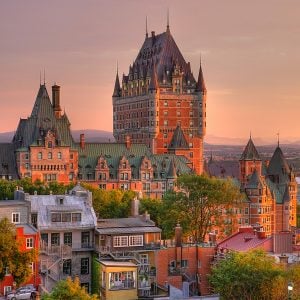
We recently sat down with researcher Brandt Gibson to discuss French-Canadian research and how it might differ from other areas of genealogy research. Not only did we get some great information, but we learned a lot about what drives a researcher like Brandt. Q: Would you introduce yourself and tell us about what initially interested you in genealogy and French-Canadian research? A: My name is Brandt Gibson and I’ve been a researcher for 18 years. I've been working for Legacy Tree … [Read more...]
Tips and Resources for Researching Immigrant Ancestors from Austria

Legacy Tree Genealogists' Shelbie Drake specializes in German and Austrian research. In this article, she provides valuable tips and resources to help you find records in the area that was once known as the Austro-Hungarian Empire. The Austro-Hungarian Empire At face value, the name of the Central European country Austria seems straightforward. However, the history of the Austro-Hungarian Empire - the dual monarchy of the Austrian Empire and the Kingdom of Hungary - is a prime example of why … [Read more...]
Finding Genealogical Information and Clues in the Freedman’s Bank Records

Legacy Tree Genealogists' Elyse Hill specializes in African American and Southern States research. In this blog, she provides information about a private savings bank established in 1865 in emancipated communities. In addition to inventory lists included in wills and probate records of enslavers, these bank records can be a valuable source to find an ancestor’s name and other information. The Freedman’s Bank, also known as Freedman’s Savings and Trust Company, was established in 1865. The … [Read more...]
Ask a Genealogist: Indigenous Peoples & Native American Research

In honor of Indigenous Peoples’ Day, Legacy Tree Genealogists’ Kate Eakman discusses her interest in this area of research and some of the challenges in tracing Indigenous and native cultures in the United States and around the world. Q: Would you tell us about yourself and your view of genealogy? A: I'm Kate Eakman, Legacy Tree Genealogists' British research team manager and a former history professor. I look at genealogy as a branch of history. It's a very personal history, but it's … [Read more...]
Legacy Tree Onsite: Belarus Archives and Records Collections
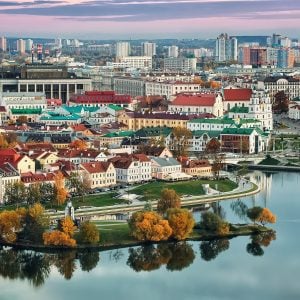
Legacy Tree Genealogists’ Dennis Baranov has conducted research in Russia, Belarus, and Ukraine for more than 15 years. His wife Mariya is his research helper and translator. In this article, they provide detailed information about Belarus archives and records to research family histories, especially in an area where many documents have been destroyed. Belarus is a landlocked country in Eastern Europe, surrounded by Russia, Ukraine, Poland, Lithuania, and Latvia. Minsk is the capital and … [Read more...]
How to Get More from Today’s Genealogy Events & Meetings

Legacy Tree Genealogists' James (Jim) Beidler discusses the changing landscape of genealogy events and meetings and offers tips on how to get the most out of these modern, largely online, learning opportunities. Genealogy events have certainly changed over the years. In the past, local meetings often had speakers who were knowledgeable but sometimes had less than scintillating presentations. Full-day seminars, often with a single speaker, dotted seasonal calendars. Large events often had … [Read more...]