
Women homesteaders played an important role in settling the United States. Beginning in the 1860s, thousands of women used federal homesteading laws to claim land across the Midwest and West.
The Homestead Act of 1862 allowed any citizen or intended citizen who was the head of a household, or at least 21 years old, to claim 160 acres of government land. Importantly, the law did not exclude women.
This created a rare opportunity at a time when women had limited property rights. Under the law:
- Single, widowed, or divorced women could file a claim
- Married women typically could not file if living with their husbands
- In some cases, women with absent or deserting husbands could claim land to support their families
After filing, homesteaders had to “prove up” their land by living on it, building a home, and farming it for five years. Once completed, they received legal ownership through a land patent.
Women made up an estimated 10 to 15 percent of all homestead claims, with even higher participation in places like Wyoming and Montana. For many, homesteading offered a path to financial independence in a society with limited opportunities for women.
Behind the Scenes: Life as a Woman Homesteader
Who Were Female Homesteaders?
Female homesteaders came from many different backgrounds, but they shared one goal: owning land in the American West.
Some were young, single women seeking independence before marriage. Others were widows working to support their children. Many were immigrants from Europe building new lives, while African American women moved west after the American Civil War in search of opportunity.
These women took advantage of the Homestead Act of 1862 to claim land and shape their futures in a way that was rare for the time.
What Challenges Did Women Homesteaders Face?
Life on a homestead was difficult for everyone, but women often had fewer resources and less support.
Common challenges included:
- Isolation: Claims were often far from towns or neighbors
- Harsh conditions: Blizzards, droughts, prairie fires, and insects were constant threats
- Physical labor: “Proving up” required building homes, digging wells, fencing land, and farming
- Limited support systems: Women sometimes relied on neighbors or hired seasonal help
- Land disputes: Some faced “claim jumpers” who challenged their legal right to the land
Despite these obstacles, many women successfully managed and improved their homesteads.
Why Do Women Homesteaders Matter?
Women homesteaders played a key role in shaping the American West.
As landowners and taxpayers, they helped strengthen the case for women’s rights, including the right to vote. States like Wyoming, Utah, and Colorado were among the first to grant women’s suffrage.
Their success challenged the idea that women could not manage land or participate fully in society. In doing so, female homesteaders helped shift both social and political expectations in the United States.
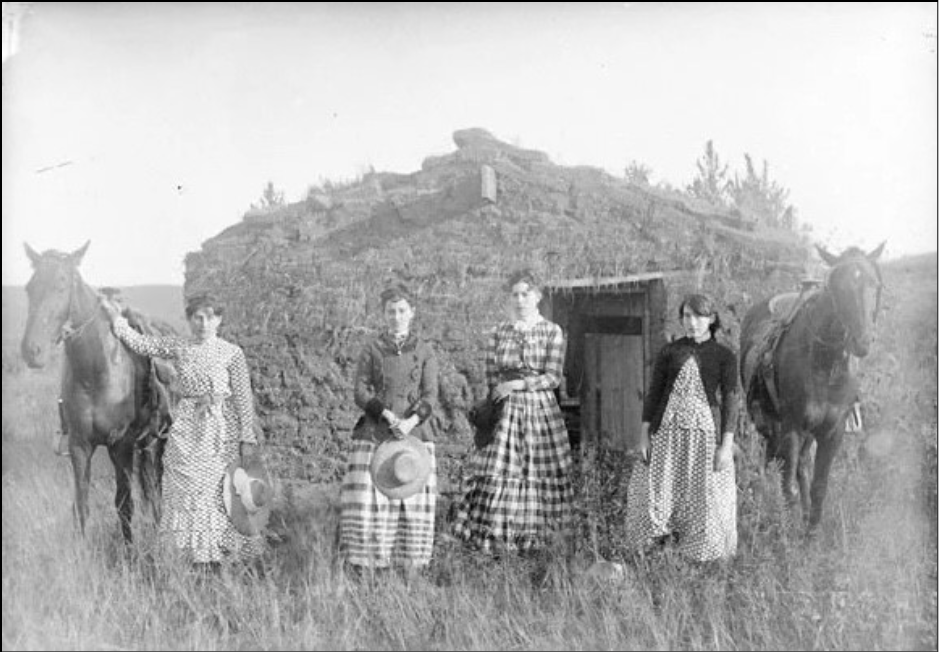 The homesteading Chrisman sisters, courtesy of the Nebraska State Historical Society.
Meet Women Homesteaders Who Claimed the American West
Every land patent tells a story. For many women, the Homestead Act of 1862 offered a chance to start over, gain independence, and own land in the American West.
Here are a few remarkable women homesteaders and the lives they built.
Elinore Pruitt Stewart (Wyoming Homesteader)
Elinore Pruitt Stewart was a widow who moved to Wyoming in 1909. She worked as a housekeeper for a rancher before filing her own homestead claim nearby.
She later became known for her letters describing daily life on the frontier, including the challenges of “proving up” her land. These writings were published as the book Letters of a Woman Homesteader, offering a firsthand account of a woman homesteader’s experience.
Agnes “Annie” Morgan (Montana Homesteader)
Annie Morgan was born into slavery in Maryland. She worked as a cook for the army battalion that fought the Battle of the Little Bighorn. After leaving her work with the Army, she homesteaded land on Lower Rock Creek in Granite County, Montana. She lived on her homestead until her death.
The Chrisman Sisters (Nebraska Homesteaders)
In the late 1880s, sisters Lizzie, Lutie, Alice, and Ruth Chrisman filed claims in Custer County, Nebraska.
By filing claims near one another, they were able to meet homestead requirements while staying connected as a family. This approach helped reduce the isolation many women homesteaders faced and showed how some adapted the system to build support networks on the frontier.
Martha Knight Mills (Utah Homesteader)
Martha Knight Mills pursued homesteading later in life after three marriages. She filed claims on two sections of land in Cache County, Utah.
At 71 years old, she successfully received her land patents. She later sold the land, providing financial security in her final years. Her story highlights how homesteading offered independence at any stage of life.
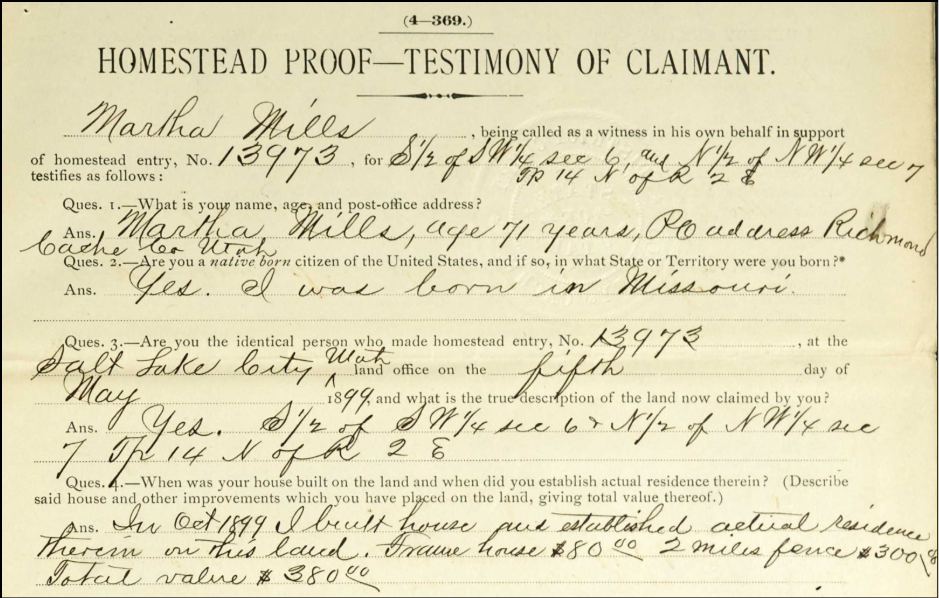 A filing document with details about Martha Knight Mills’s homestead claims. Courtesy of Ancestry and the National Archives and Records Administration (NARA).
How to Find Homesteading Ancestors in U.S. Records
If you suspect your ancestor was a homesteader, there are several records that can help you confirm it. Because the government required proof of residency, homestead records are often more detailed than census records and can reveal valuable family information.
Search Land Patents Online
Start with the Bureau of Land Management General Land Office (GLO) website.
You can search by your ancestor’s name and state. If they completed the homesteading process, you may find a digital copy of their land patent. This record shows:
- The location of the land
- The date the patent was issued
- The legal land description
Order Homestead Case Files from the National Archives
A land patent is only the beginning. The full homestead file, held by the National Archives and Records Administration, contains much more detail.
To request these records, you typically need the land description or patent number from the GLO database.
Homestead case files may include:
- Age and citizenship details
- Names of family members
- Proof of residence and improvements
- Information about the home, land, and crops
For women, these files can be especially valuable. They may include maiden names, evidence of a husband’s death, or naturalization records for immigrant ancestors.
Some records for states like Alaska, Nebraska, and Wyoming are also available on platforms like Ancestry and Fold3.
Check Local Land Records and Plat Maps
Local records can provide additional context about your ancestor’s land and community.
Check county offices for plat books and land maps. These show who owned land in a specific area. If you find a woman listed among mostly male landowners, it may indicate she was a homesteader.
The Lasting Impact of Women Homesteaders
The Homestead Act of 1862 created a rare path to independence for women in the 19th century.
By claiming 160 acres of land, women proved they could manage farms, build homes, and succeed on the frontier. Their efforts helped shape communities and contributed to the growth of the United States.
For modern researchers, homestead records offer more than historical facts. They provide a detailed look into everyday life, revealing how women lived, worked, and supported their families. These records preserve stories of resilience, independence, and determination that might otherwise be lost.
Tools to Research Homesteading Ancestors
If you are researching homesteading ancestors, these resources are a great place to start:
- Bureau of Land Management General Land Office (GLO): Search land patents by name and location
- National Archives and Records Administration: Access full homestead case files and supporting documents
- Homestead National Historical Park: Learn more about homesteading history and records
Ready to Discover Your Homesteading Ancestors?
Homestead records can reveal details you will not find anywhere else. They often include family relationships, migration patterns, and personal details that bring your ancestors’ stories to life.
At the same time, these records can be difficult to locate and interpret, especially when researching women whose names may have changed over time.
If you are ready to go further, our team at Legacy Tree Genealogists specializes in uncovering hard-to-find records, including homestead files, land records, and female ancestry lines. Whether you are facing a research “brick wall” or want a complete family history, we can help you turn historical records into meaningful answers. Contact us to get started today!
If you liked this article, you may also find these Legacy Tree Genealogists articles helpful:
Searching for Sarah: Strategies for Researching Female Ancestors
Finding Women Ancestors in Your Genealogy Research: Remember the Ladies!
Leave a Reply